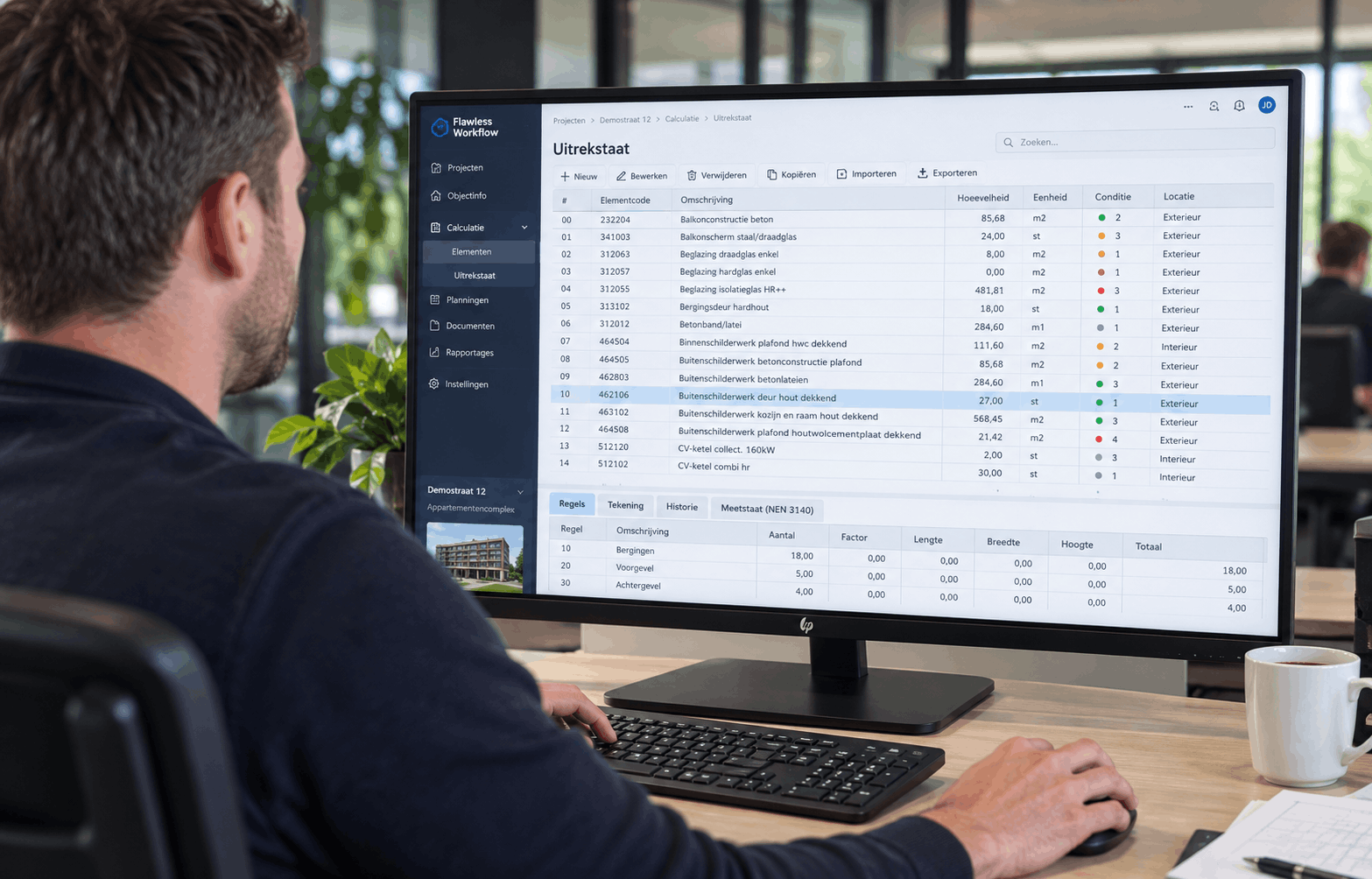
How contractors and subcontractors are leveraging AI in their estimation process
Discover how both subcontractors and general contractors can choose the right projects and win more bids without replacing their estimating software.
What is the current estimating problem?
This is a familiar scenario for many contractors and subcontractors: it’s Monday morning, 9:15 AM. In the department where project inquiries arrive, three new requests are already waiting to be reviewed. The estimating team has been working since yesterday morning on a quote that should have ideally been sent out yesterday afternoon. Meanwhile, project preparation is trying to finalize a schedule for a project starting next week.
The challenge isn't in execution. Capacity is available and can be scaled up as needed with flexible staff or by hiring new personnel. However, finding the right staff for the office, where it is so busy, is difficult. Skilled estimators, in particular, are in short supply. And the two good estimators you do have are spending days measuring drawings and combing through specifications for quotes that you don't even know will turn into a contract.
We notice at many construction companies that there are plenty of project inquiries (from both partners and general requests), but capacity forces you to be selective about which projects you estimate. Even the process of deciding whether to bid on a project takes a lot of time. This is valuable time, because you need that estimator to win more projects.
Estimating software helps with the calculation process, but most of the work from inquiry to quote happens before the actual estimating begins. Assessing whether a project is a good fit, reviewing documents, reading and measuring technical drawings, and entering material lists takes hours to days per project.
What does this mean for contractors and subcontractors?
For contractors and subcontractors, we often see that they would like to take on more projects, but limited capacity in sales and estimating prevents production from running at full capacity. As a result, these departments have to be selective about which inquiries they pursue, often defaulting to the safe choice of working with established partners, even when those projects may not be the best fit for the company's strengths. This comes at the expense of margins and revenue, and prevents the company from growing further.
How do BuildIntake's AI agents solve this estimating problem?
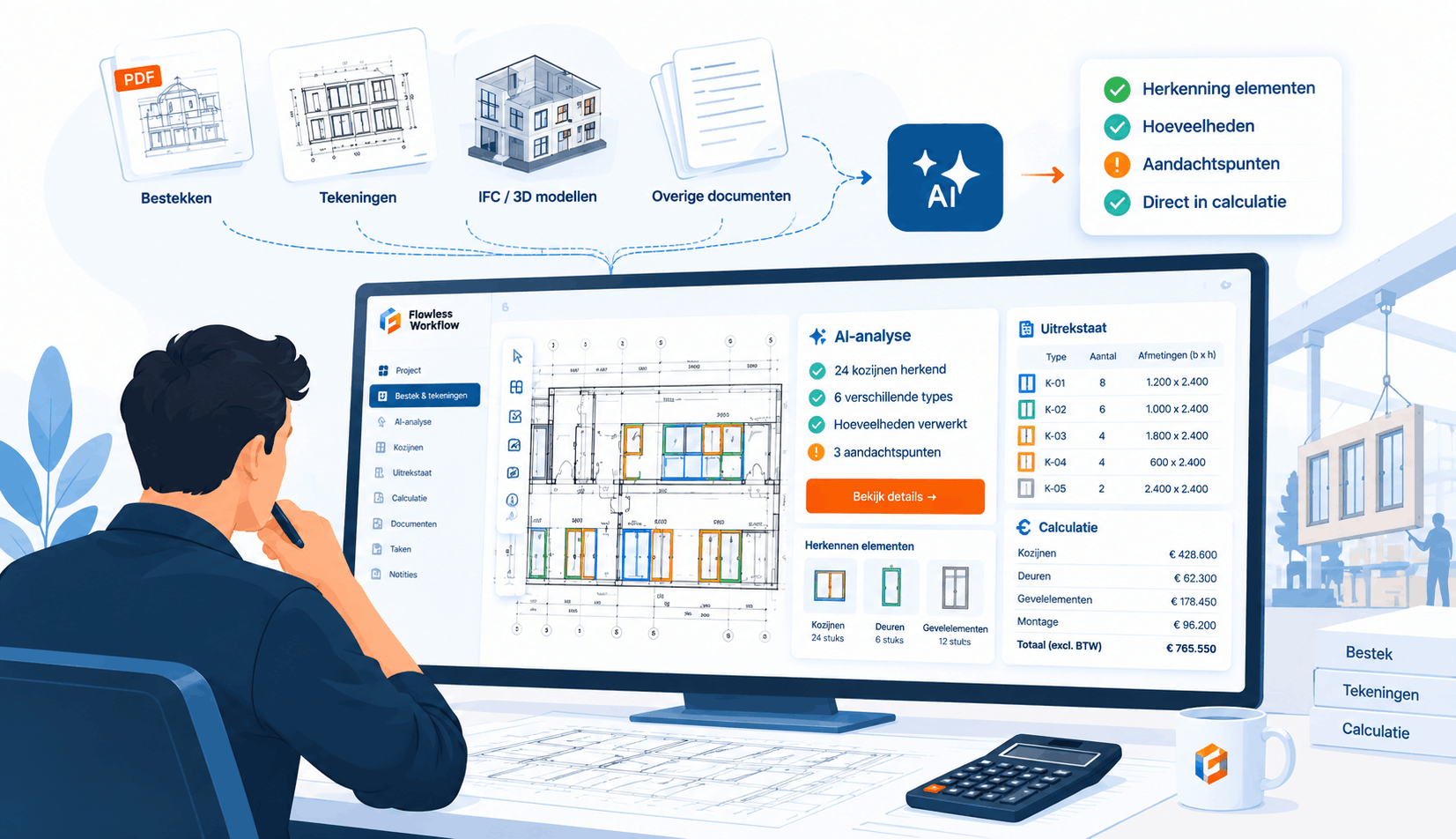
While a calculation program focuses primarily on the math, BuildIntake supports the entire surrounding process. You bring a project request together with its associated documents and drawings into a single environment. From there, the estimator directs specialized AI agents to handle repetitive and information-intensive tasks. The estimator maintains control and oversight, while AI agents analyze specifications, read drawings, and assist in preparing quotes.
Beyond efficiency, BuildIntake can be integrated with all your other systems, such as your estimation software, CRM, or ERP, ensuring it fits seamlessly into your current workflow. The benefits are not only that the process becomes 2 to 6 times faster and more accurate, but these integrations also provide insights into which projects are successful and which are not, which projects offer the best margins, and which align with your schedule, allowing you to steer your business accordingly.
Want to read more about BuildIntake?
The webpage about BuildIntake provides a good first impression of what the platform has to offer. If you would like to have an informal introductory chat, please feel free to get in touch!
Sign up for our newsletter
Every month, we'll send you one email full of smart insights about data-driven work, AI applications and software choices that really help you.
Related articles