Data extraction: from document to usable data
Discover how data extraction automatically converts documents into structured data. Save time, prevent errors, and eliminate manual data entry.
Manual data entry
Monday morning. A recruiter receives ten new CVs via email.
An estimator receives a request with a 300-page PDF.
In the administration department, invoices arrive that need to be processed in the ERP system.
Despite all the smart software organizations use today, often the exact same thing happens next.
Someone opens a document, searches for the correct information, and manually types it into another system.
Every organization knows these kinds of processes. They are time-consuming, error-prone, and ensure employees are busy with administrative tasks instead of activities that truly add value.
Many organizations think that's just part of the process.
That's not the case.
With modern data extraction, documents can be automatically converted into structured data that is directly usable within existing software and processes.
What is data extraction?
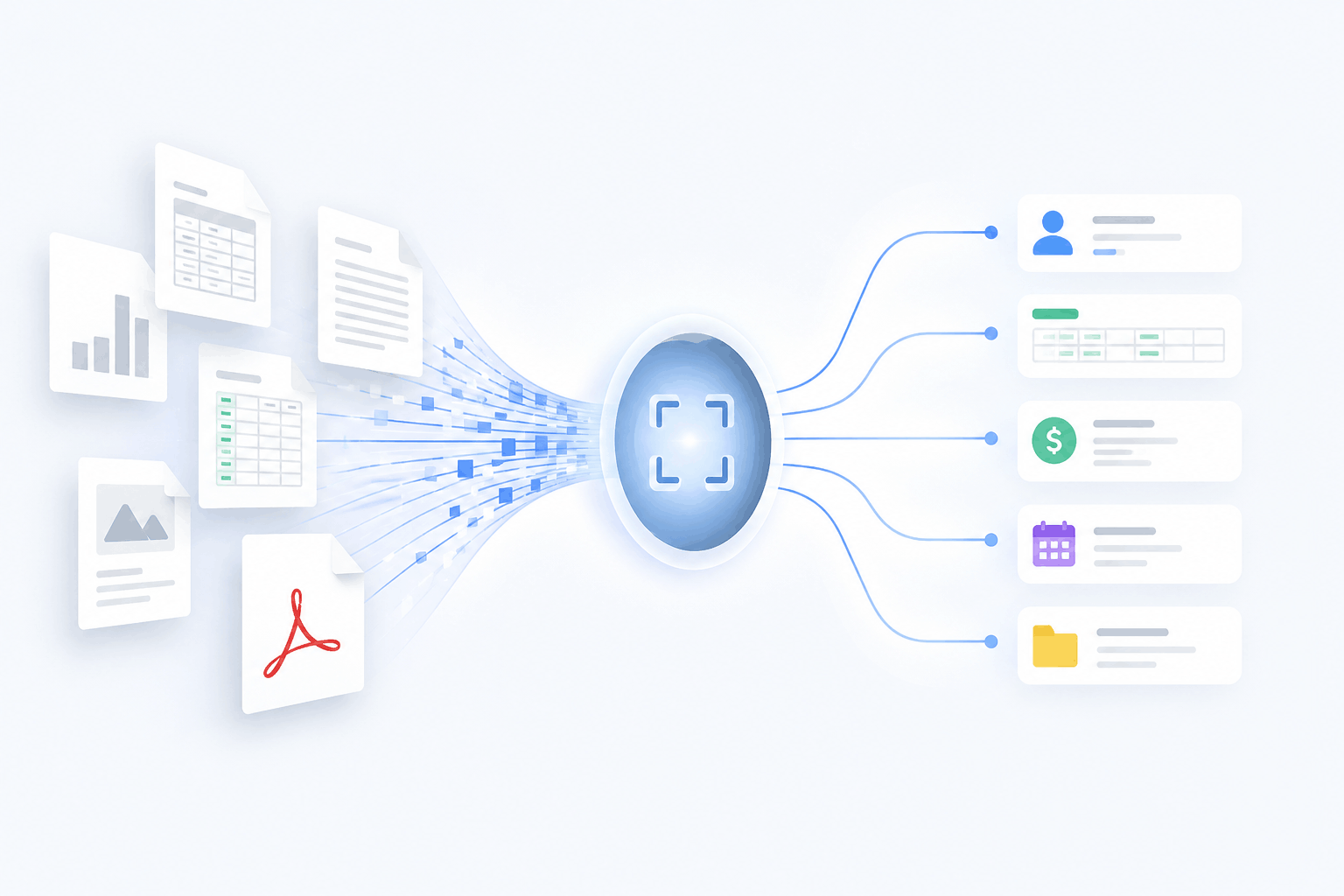
Data extraction is the process of automatically extracting information from documents and converting it into structured data.
Instead of manually typing data, relevant fields are automatically recognized, interpreted, and processed.
For example, consider:
- A CV that is automatically processed in an ATS system
- An invoice that is automatically imported into an ERP system
- A specification document that is automatically converted into calculation information
- An intake form that is directly processed into a client system
The goal is always the same: to make information from documents available for processes and software.
Where employees previously had to open, search through, and retype documents, modern data extraction can largely automate this process.
This not only saves time but also leads to higher data quality and reduces the chance of errors.
Practical examples of data extraction
Data extraction is now applied in almost every sector. Wherever employees need to transfer information from documents into a system, this process can be automated.
Recruitment: from CV to ATS
Recruiters receive CVs from candidates daily. Often, data such as name, work experience, education, and skills must be manually transferred into an ATS system.
With data extraction, this data is automatically extracted from the CV and directly processed into the recruitment system. This allows recruiters to focus on candidates instead of administration.
Construction: from specifications to calculation
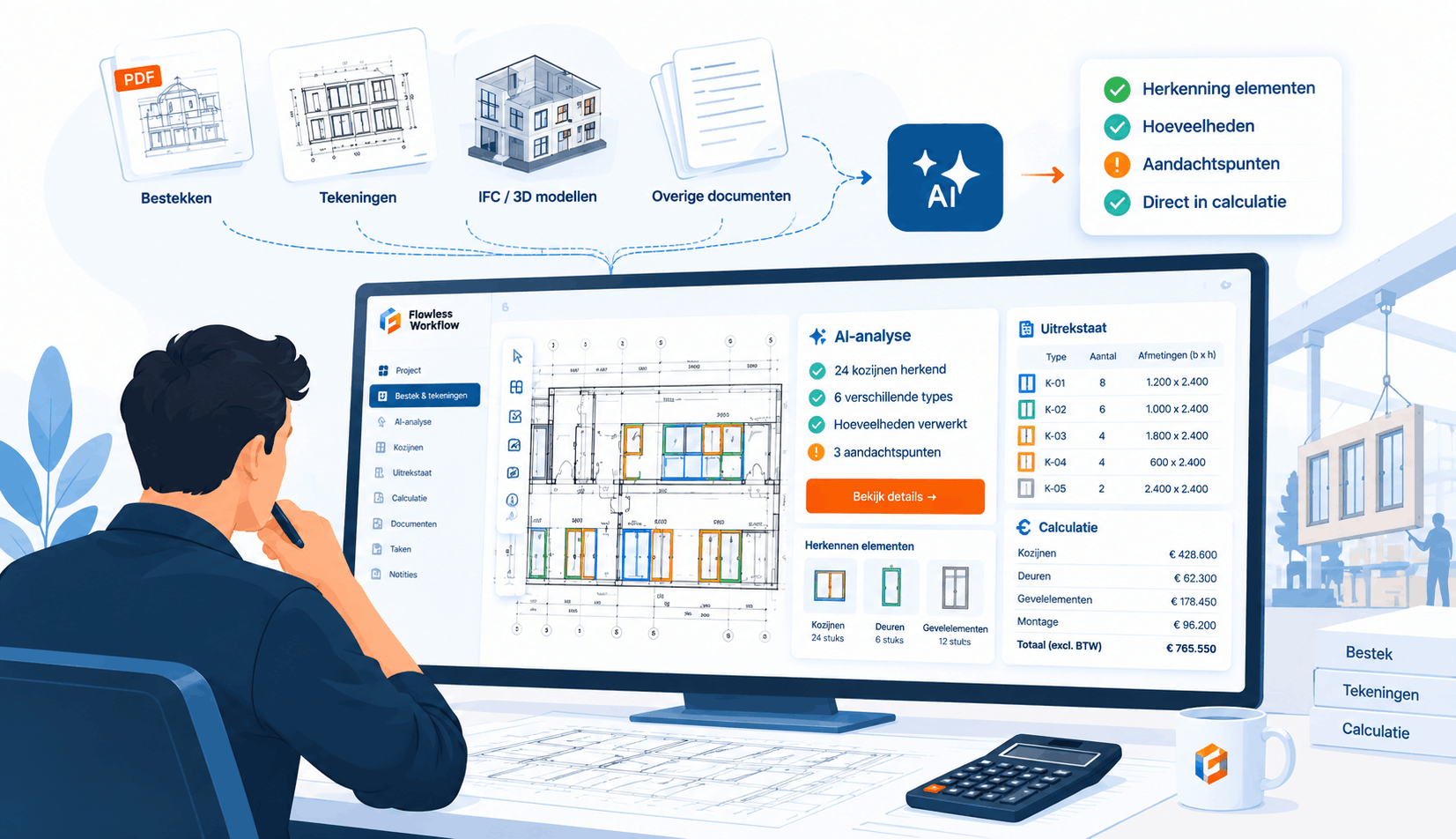
Calculators work daily with specifications, drawings, and project documentation. Gathering materials, quantities, project requirements, and product specifications often takes a lot of time.
With data extraction, this information is automatically extracted from documents and compiled into an overview for calculation, work preparation, or ERP software.
Finance: from invoice to ERP
Many financial departments process large numbers of invoices daily.
Data such as invoice number, supplier, amounts, and payment terms can be automatically extracted and directly recorded in the accounting system.
This reduces processing time and significantly lowers the chance of errors.
Safety & inspection: from certificate to system
Certificates, inspection reports, and inspection records often contain important information that needs to be registered.
Data extraction can automatically capture serial numbers, inspection dates, expiry dates, and product information, ensuring organizations always have access to current and reliable data.
Care & welfare: from intake form to client system
Within care and welfare organizations, intake forms, authorizations, and other client documents are processed daily.
With data extraction, relevant client data is automatically transferred to the client system. This reduces administrative burden and frees up more time for clients.
The true value of data extraction
Many organizations believe that the greatest value of data extraction lies in faster document processing.
In reality, it's about something much more important.
It's about eliminating manual data entry between documents, systems, and processes.
An organization, after all, revolves around information.
Customer data, projects, candidates, invoices, orders, products, and schedules form the foundation of almost every business process.
Software plays an important role in this, but ultimately, systems are merely where information is recorded and used.
The actual process is about the flow of information:
- From inquiry to quote
- From CV to candidate
- From invoice to financial insight
- From specifications to calculation
That's precisely where unnecessary manual work often occurs.
Yet, organizations spend hours daily opening documents, searching for information, and manually transferring data into software.
Not because the information is missing, but because it's in the wrong place.
Data extraction automates precisely that process.
Information is automatically extracted from documents and made directly available where it's needed. This not only saves time but also leads to higher data quality, fewer errors, and a much more efficient process.
Why AI is fundamentally changing data extraction
The concept of data extraction has existed for years.
Traditionally, OCR technology was often used for this. While it could convert documents into text, understanding the content remained difficult.
Modern AI solutions go much further.
They not only recognize text but also understand the context of documents. This allows materials, projects, candidates, products, amounts, and specifications to be automatically interpreted and processed.
As a result, data extraction becomes applicable to much more complex documents, such as CVs, specifications, certificates, forms, and technical documentation.
Where previously many exceptions and manual checks were required, AI can now independently perform a large part of this process.
From document to data with Doc2Data
Within Flawless Workflow, we call this approach Doc2Data.
With Doc2Data, documents are automatically converted into structured data that is immediately available within existing software and processes.
Whether it's CVs, specifications, invoices, certificates, or intake forms: information is automatically recognized, processed, and made available where employees need to work with it.
This eliminates manual retyping from processes and creates a more efficient way of working.
Because ultimately, data extraction isn't about documents.
It's about automatically making information available where it's needed.
Sign up for our newsletter
Every month, we'll send you one email full of smart insights about data-driven work, AI applications and software choices that really help you.
Related articles