Creating cost estimates with AI
Discover how to create cost estimates faster and more consistently using AI. Automatically analyze specifications and drawings, while keeping the estimator in control.

Create cost estimates faster and more consistently with AI
As an estimator, you know the scenario all too well: a pile of requests, specifications and drawings that don't align seamlessly, and a deadline that is already looming. A cost estimate created with AI sounds appealing in such a situation. But what does it mean in concrete terms, and do you, as head of estimation, still remain in control? In this blog, we explain how it works in practice, where the time savings come from, and why your professional expertise remains the driving force.
What exactly is a cost estimate?
A cost estimate is a well-founded assessment of the expected construction costs of a project, based on the information available at that time. Early in a project, you often work with key figures; as the design crystallizes, the construction cost estimate becomes increasingly detailed. This is how a rough initial assessment grows into a detailed calculation.
Many organizations rely on a fixed cost classification for this. The Dutch standard NEN 2699 provides a standardized structure for investment and operating costs, from land and construction costs to incidental expenses and contingencies. Such a uniform classification makes estimates comparable and prevents items from being overlooked.
Yet, in practice, the final outcome often deviates from that initial estimate. This is rarely due to the calculation itself. Usually, the problem lies in the information on which the estimate is based, as we explained earlier in calculating construction costs: why your outcome often deviates. And that is exactly where AI offers a solution.
Creating a cost estimate with AI: what changes in practice?
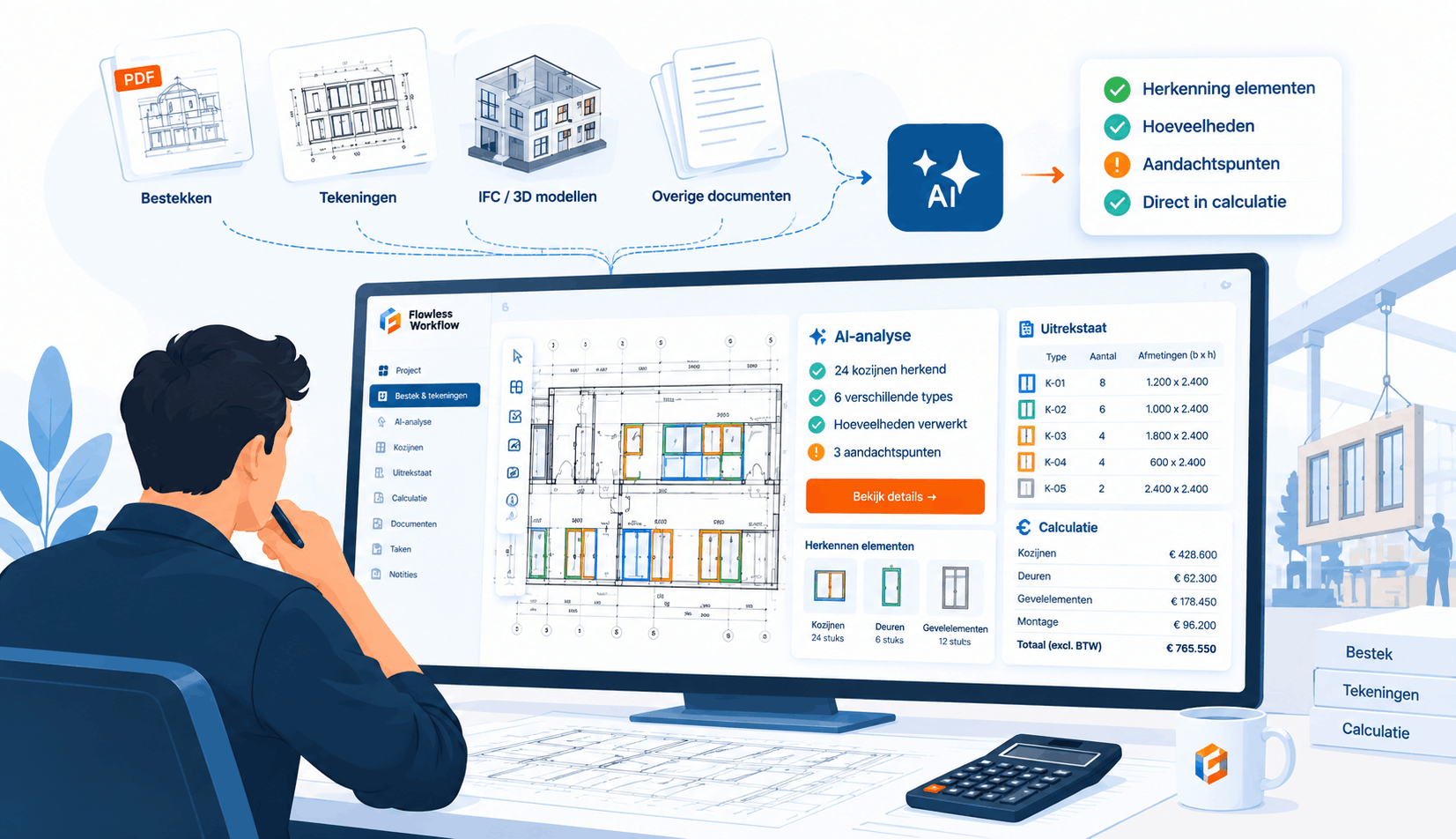
When creating a cost estimate with AI, the work that takes up most of your time shifts: it’s no longer the calculation itself, but the gathering and organizing of information. AI reads your specifications, drawings, and attachments, extracts the relevant quantities and specifications, and structures them into usable data. You then process that data into your own calculation. You can read about what that looks like for each document type in AI analyzes your construction specifications.
From fragmented documents to a single overview
Information for an estimate is rarely in one place. It is scattered across specifications, multiple drawings, an energy performance report, and sometimes a separate email. The Specification Agent brings those sources together into one structured overview. This makes it less likely that you will miss an item, allowing you to start your construction cost estimate with a more complete picture.
Consistency: the same principles, every time
Two estimators working on the same project rarely arrive at the exact same result. That is because everyone makes slightly different assumptions. By defining your company context, standards, exclusions, risks, and preferences, AI applies the same principles to every request. This makes your cost estimate more predictable and easier to justify to your client.
Handle more requests without compromising on quality
Because the preparatory work is faster, you have more time for the requests that really matter. Estimators who work with AI find they can assess more projects in the same week. Moreover, that speed makes it easier to be more selective: not every request deserves a full breakdown, and with AI, you can see more quickly which ones do.
Estimating stays in control
Let’s be clear: AI does not replace the estimator. Creating a cost estimate with AI means that AI handles the time-consuming groundwork. It reads, structures, and pre-organizes information, while you retain the professional judgment. After all, AI lacks the context of the construction site, experience with a specific client, and the intuition for where a project becomes risky.
That is why it works this way: AI provides a structured proposal, and you review, adjust, and decide. Your company context also ensures that it is not a generic calculation, but an estimate that aligns with how your business operates. In short: the technology does the prep work, but the lead estimator remains at the helm.
How to start creating a cost estimate with AI
In practice, the process usually follows five steps:
- Define your business context. Describe your standards, standard exclusions, known risks, and preferences. This is the foundation that makes the estimate specific to your business.
- Provide the project documents. Think of specifications, drawings, and relevant attachments such as an energy performance report.
- Let AI structure the information. The relevant quantities and specifications are automatically organized into usable data.
- Review and adjust. Your professional expertise remains the guiding factor; you correct where necessary and add details.
- Learn from post-calculation. Compare your initial estimates with actual costs on won projects. This allows you to continuously refine your assumptions.
This way, you build a more reliable estimation process step by step, rather than starting from scratch with every new request.
Cost estimate, calculation, or budget: what is the difference?
These terms are often used interchangeably, even though they don't mean the same thing. A construction cost estimate is a rough assessment based on limited information, usually early in the process. A construction cost calculation is the detailed breakdown, including quantities and unit prices down to the line-item level. A budget is the final financial picture you present externally. AI is useful at every step, but the difference in the level of detail determines how much you can expect from the outcome.
Conclusion: creating cost estimates with AI
Creating a cost estimate with AII t is not about handing over your work, but about eliminating time-consuming prep work. AI reads and structures the information; you, as the estimator, retain control and final judgment. The result is an estimate that is completed faster, built more consistently, and easier to justify. This allows you to process more requests without compromising on quality.
Curious about how this could work for your estimation process? Schedule a free demo or discover what BuildIntake can do for construction suppliers.
Do you want to go from inquiry to project faster with AI?
Discover how BuildIntake helps subcontractors process inquiries smarter, select the right projects, and achieve more with the same team.
Related articles
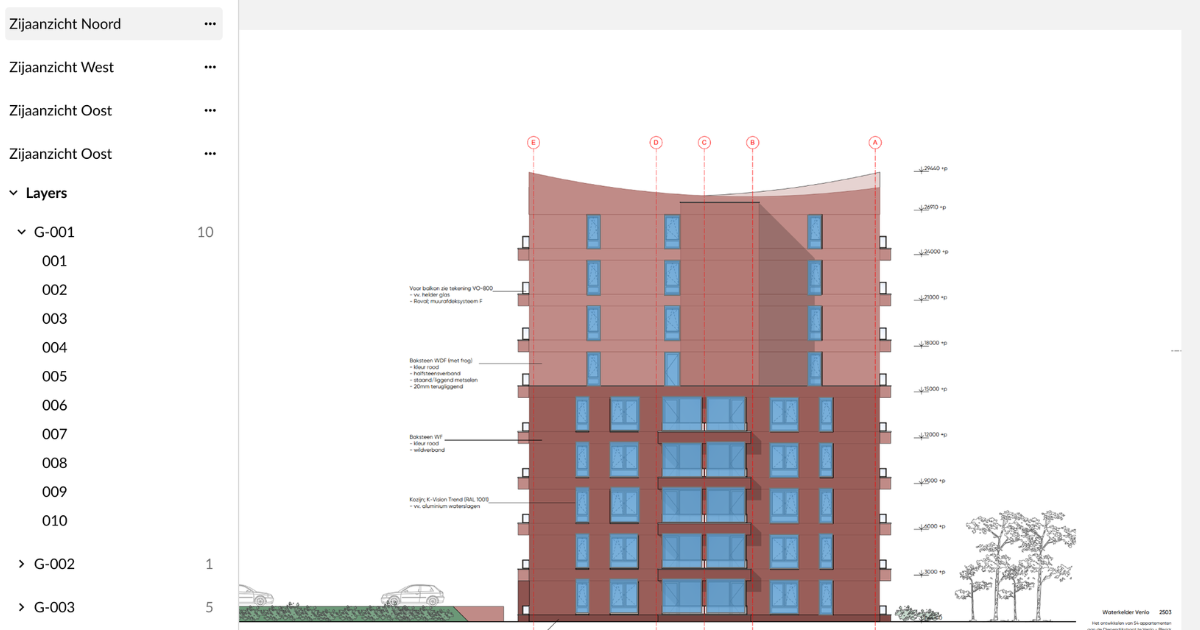
Construction estimation software primarily helps with calculating costs, hours, materials, markups, and margins. AI assists by analyzing project information from various sources simultaneously and providing actionable input for the rest of the estimation process.