Does your HR department already have a Flawless Workflow?
Does your HR department already have a Flawless Workflow? AUTHOR Edou Reekers As an HR professional, you want to invest your time and energy in human and...

A Flawelss Workflow
As an HR professional, you want to invest your time and energy in the human and strategic aspects of HR within the organization. Don't waste this time on the repetitive and technological issues associated with HR activities. There is so much value to be gained from a strong strategic HR policy, but often the HR manager's valuable time is still spent on technological issues and recurring repetitive tasks. With so many opportunities to work smarter these days, this should be possible differently.
In today's rapidly changing world, the need to take advantage of the opportunities that technology has to offer your organization is growing. Software is used in organizations to make processes run more efficiently and to eliminate the susceptibility to errors. However, there is often the feeling that applications do not work for you, but that you are working for the applications. In this blog, we'll show you how things can be done differently.
“Software that doesn't communicate with each other will result in a lot of manual repetitive work.”
One of the biggest factors in how efficiently a software landscape is organized is the number of applications within an organization and how they communicate with each other. Using a stand-alone ERP package, planning tools, remuneration systems and financial software that do not communicate with each other will result in a lot of manual repetitive work. Due to the high workload at ICT departments, they often do not get around to (further) developing links and smart information exchange between the applications.
“Before an HR department can be unburdened, the current information flows must first be mapped out.”
Before an HR department can be unburdened, the current information flows must first be mapped out. Where a lot of repetitive work is carried out, there is potentially a lot of profit to be achieved and is a good starting point to start optimizing. It comes down to creating an overview and simplifying and digitizing complicated HR processes. The questions why processes have been set up in a certain way are often no longer asked. Then an independent perspective to take a critical look at this is very useful.

“One of the topics in HR is having insight into the turnover and absenteeism of the workforce.”
One of the topics in HR is having insight into the turnover and absenteeism of the workforce. On an annual basis, the absenteeism and attrition rates are often well known. However, having live insight so that it can be responded to and adjusted in time is often a luxury that organizations do not have yet. Many ERP systems do not have good functionality for displaying such figures in reports. Business intelligence solutions are often a solution for this. Only before such business intelligence applications can be valuable, the data flows need to be properly organized. This prevents it from being mapped ad hoc because there is constant insight into these figures.
“The time to map out the entire workforce, including all variables per employee, is often not freely available”
For example, strategic personnel planning is also a facet that is on the to-do list for many organizations. Only the time to map out the entire workforce, including all variables per employee, is often not freely available. Understanding the workforce and long-term forecasts of turnover, pensions and their associated skills is crucial for organizations with complex staffing levels. When this is drawn up, it is wise not to do this once, but to develop a sustainable evaluation system for it.
“Organizations often realize that things can be done differently and better, only how?”
Organizations often realize that things can be done differently and better, only how? This is where Flawless Workflow can support with its activities. It all starts with providing insight into the current information flows, mapping the application landscape, making recommendations from there and moving towards a more efficient and streamlined way of working. We make sure that applications start working for your organization again and not vice versa.
If you and your organization want more control over your HR processes and less repetitive work, please contact one of our consultants. Or fill out the contact form here.
Sign up for our newsletter
Every month, we'll send you one email full of smart insights about data-driven work, AI applications and software choices that really help you.
Related articles
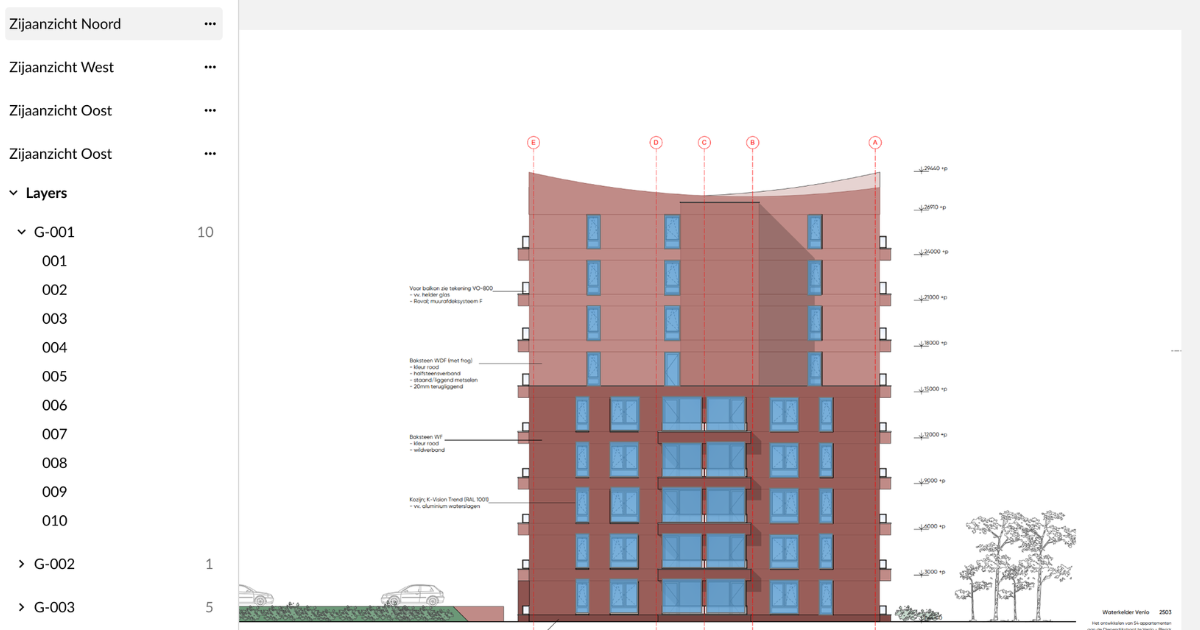
Construction estimation software primarily helps with calculating costs, hours, materials, markups, and margins. AI assists by analyzing project information from various sources simultaneously and providing actionable input for the rest of the estimation process.