Talking to your data
In today's business world, data is playing an increasingly important role. Companies that can effectively manage and use their data have a clear competitive advantage.
Our 'talking to your data' technique
Imagine stepping into a project location, where the project manager is desperately struggling through a maze of spreadsheets and systems, looking for crucial planning and budget information. As time goes by, frustration grows: “Where is that overview again?”
Did it occur to you that you could have received an answer immediately, without hassle or lost time?
With our “talking to your data” technique, this becomes possible. This gives you immediate answers to all your questions, at any time. This saves time, prevents errors and allows your company to respond to project information more quickly and effectively.
The future of data in construction
“Don't watch, have conversations with your data!”
Data has played an important role in the construction sector for years: from cost estimates and schedules to project management and maintenance. But the future now offers more than just static dashboards and reports: with the latest technologies, you can really communicate with your data. Think of a system that doesn't just show what happens, but also answers to why and what to do now.
Where companies used to rely mainly on analytics in traditional dashboards, they can now go one step further. By using AI-driven systems and a well-designed data warehouse, construction companies can actively ask questions to their data warehouse, as if they were talking to an experienced project manager. From monitoring expenses to keeping track of project progress — all answers are at your fingertips, when they're needed.
“Talking to your data” paves the way for real-time insights, improved project decisions, and increased efficiency. It transforms the way construction companies deal with data and enables them to respond quickly and accurately to changes.
What is “talking to your data”?
“Talking to your data” is an innovative technique that uses AI and machine learning. It gives users the opportunity to ask natural questions to their data warehouse and receive valuable answers immediately. The powerful thing about this technology is that you don't need any specific data knowledge; you don't need to know exactly where the data comes from, how it's stored, or what AI algorithms are behind it — *it's your data*, and answers are exclusively yours.
This technique works data from your existing systems, so that all information is secured and closed within your own environment. This keeps your data private, protected, and only accessible to you and your team. “Talking to your data” ensures that, without technical barriers, you can quickly find answers to the questions that really matter to your company. Data analysis is becoming more accessible and can be deployed immediately, without sacrificing security or privacy.
So I don't have to search myself anymore?
You no longer have to search through data and reports. Instead, you simply ask the data warehouse questions such as:
- “How much did we already spend on supplier X this month?”
- “What about the progress of project Y compared to the schedule?”
- “How much delay are we experiencing in Project A due to weather conditions?”
The system will look this up for you and come up with answers in seconds. This means spending less time searching and making faster and smarter decisions.
This technique works by connecting the data warehouse to an AI model that understands and interprets complex data in context. The AI acts as a smart assistant, not only providing figures and facts, but also proactively making suggestions and identifying trends. The result? Users get insight when needed, without delay and with full context.
Want to know more about “talking to your data”?
Our experts are happy to tell you more about how this technique can add immediate value to your projects. We are ready to help you out!
Why is “talking to your data” interesting for the construction sector?
In the construction sector, the technology “talking to your data” can make working more efficiently and flexibly, with immediate benefits in various areas:
1. More efficient project management
Construction projects are complex and often consist of multiple phases and teams. By “talking” to your data, you get immediate insight into the progress of a project. If you have questions about the status of specific phases or teams, AI-driven data analysis provides immediate answers. This makes project management more efficient and ensures that problems are identified at an early stage, so that you can make quick adjustments.
2. Cost savings through budget control
In construction, budget overruns are a major risk. With this technique, you can check the financial status of your project on a daily basis, for example by asking: “Have there been any budget overruns in the past week?” If your data chatbot detects that the budget for materials is shrinking faster than planned, you can take immediate action to reduce costs. It prevents surprises at the end of the project and helps the team to intervene in time, which ultimately prevents unnecessary costs and keeps project costs manageable.
3. Optimal resource planning
Using the right resources in a timely manner is crucial to meet deadlines and keep projects running smoothly. With this technique, you can see in real time where delays occur and where extra help is needed. This way, you can use resources effectively based on the current project status, leading to better use of materials and labor. Using the right resources in a timely manner is crucial to meet deadlines and keep projects running smoothly. With this technique, you can see in real time where delays occur and where extra help is needed. This way, you can use resources effectively based on the current project status, leading to better use of materials and labor. Using the right resources in a timely manner is crucial to meet deadlines and keep projects running smoothly. With this technique, you can see in real time where delays occur and where extra help is needed. This way, you can use resources effectively based on the current project status, leading to better use of materials and labor.
4. Flexible decision making
In an industry where conditions can change rapidly — from weather conditions to the availability of materials — “talking to your data” helps you make quick decisions. By asking your data warehouse a question, you can respond flexibly to unexpected situations and be better prepared for changes.
With “talking to your data”, a data warehouse changes from a static source full of information to an active interlocutor who provides quick and accurate answers, exactly when you need them. This way, data becomes not just a tool, but a strategic tool that enables your construction company to operate in an agile and efficient way.
What does it look like?
The concept of “talking to your data” can look like an intuitive chatbot that asks you questions and provides immediate answers. Imagine a window, similar to a messaging app, where you simply type in your question, such as: “What about the budget for project Y?” whether “Which projects are ahead of schedule?” The chatbot processes your question and immediately shows relevant data and insights, without you having to navigate through tables or dashboards.
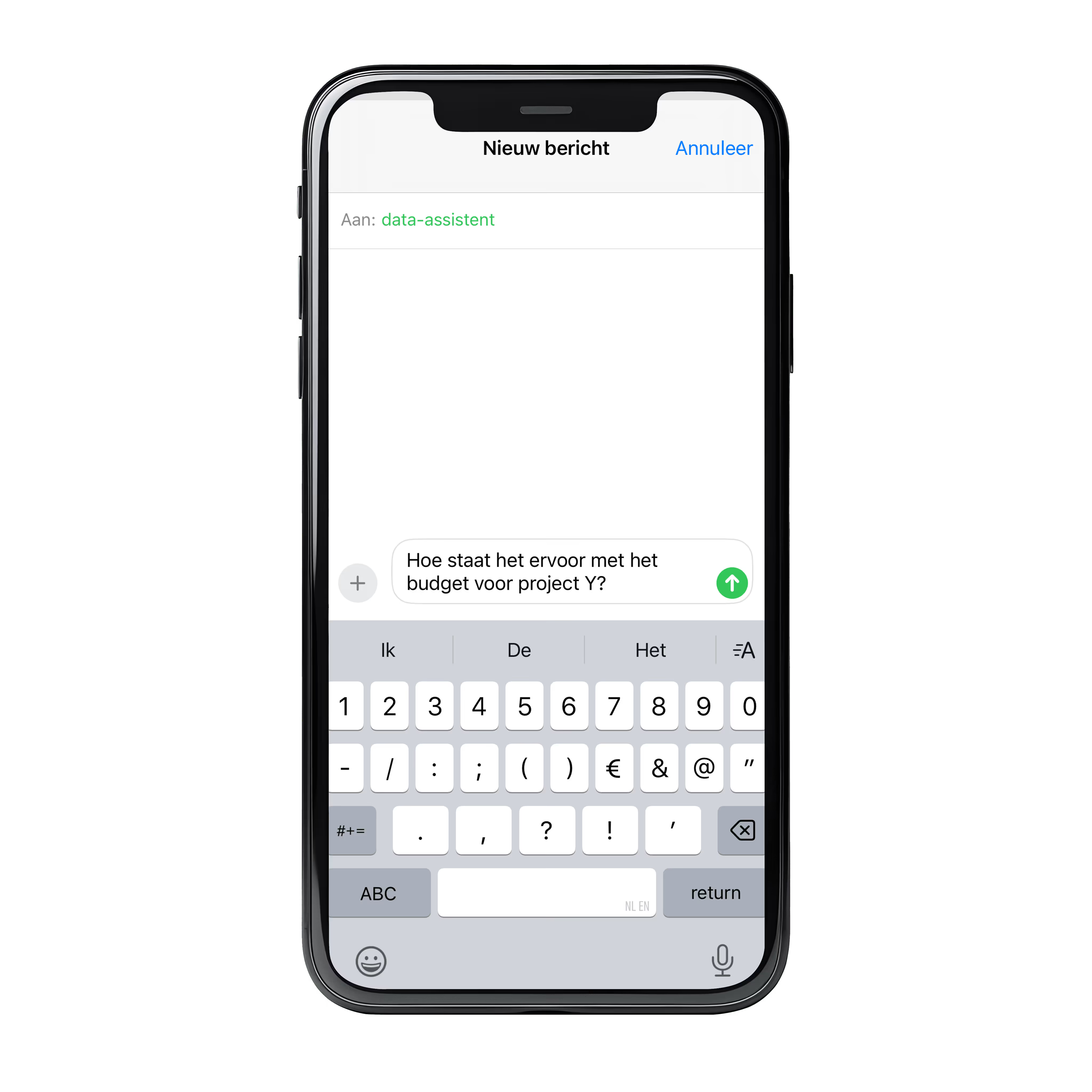

This interactive format is accessible and ensures that users of all technical levels can work with their data. Instead of doing your own analyses or scrolling through complex dashboards, you can simply ask questions. In this way, data becomes more accessible, more usable and provides rapid actionable insights.
How does it work? Behind the scenes
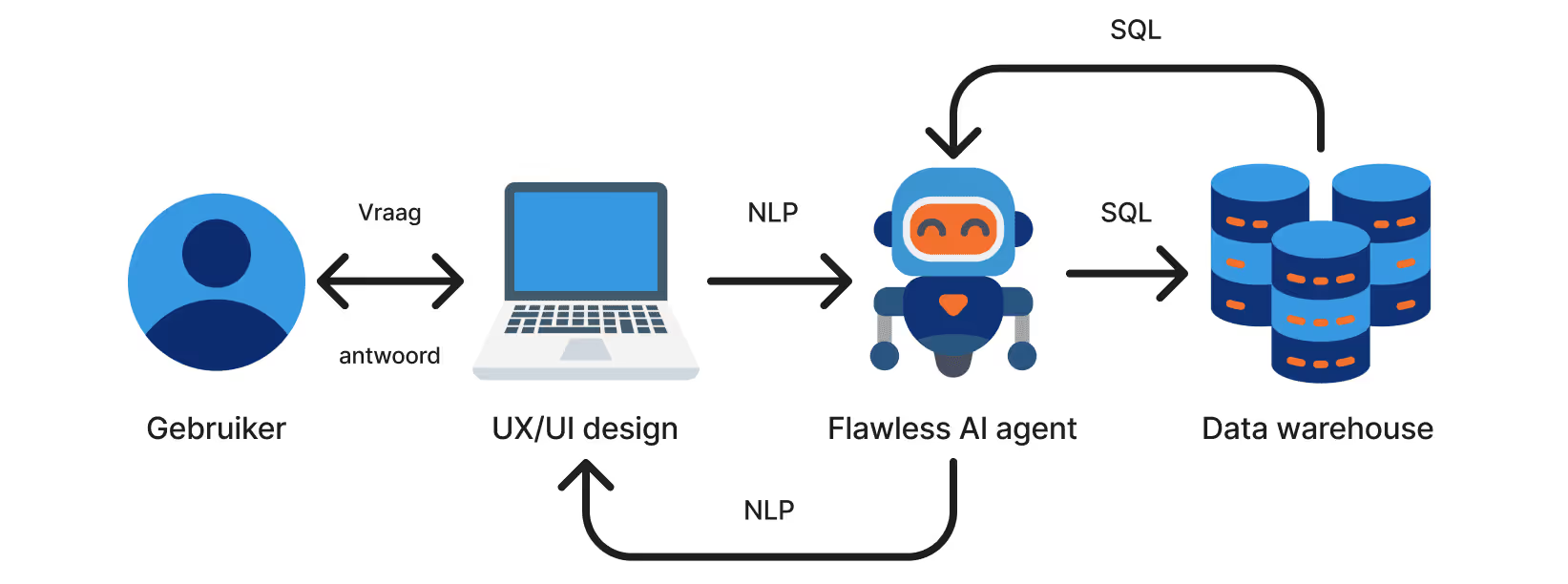
Behind the scenes, this technique works on the basis of advanced AI algorithms and natural language processing (NLP). When you ask a question to the “data chatbot,” the text is analyzed by an NLP model that understands the question and breaks it down into specific data properties (SQL). The AI system determines which sources of information in the data warehouse are relevant and performs the search based on that.
For example, when you ask about “project X budget overruns in the past month,” the AI recognizes the elements *budget exceedings*, *project X*, and *last month*, and then the system searches these parameters and shows the answer. As the AI algorithms learn from previous interactions, the answers become more and more tailored to your specific information needs over time.
In short, this technology makes it possible to search complex data sets quickly and intuitively, allowing companies not only to better understand their data but also to make strategic decisions more quickly.
Want to know more about how we use this technology? Then take contact join us!
How do you set this up?
To “talk to your data” within your company, two key elements are needed: a well-organized data warehouse and an AI-driven data assistant.
1. Your data warehouse
The first thing to set up is a data warehouse. Here, all relevant project data from various systems is collected. This data warehouse acts as the central place where data — such as project management, budgets, and suppliers — is stored and organized. A well-organized data warehouse ensures that all information is available in a consistent and standardized way, so that your data assistant can easily search and filter. It translates raw data from various sources into an unambiguous structure that is ready for analysis.
2. Your AI data assistant
The next step is to build an AI-driven data assistant. This assistant acts as an interface between the user and the data warehouse. The assistant - usually a chatbot or question and answer system - can use natural language processing (NLP) to understand user queries and extract the correct data from the data warehouse. When a user asks a question, the assistant analyses the question, finds the relevant information in the data warehouse, and presents an immediate answer. This process can be self-learning, making the AI assistant smarter and better tailored to specific business needs with each question.
3. Integration and fine-tuning
For everything to work smoothly, a phase of integration and fine-tuning is important. This means that the assistant is regularly tested and optimized so that he understands the right context and has access to the latest data. Through tests and feedback loops, you can ensure that the data assistant answers questions more and more accurately and further refines its analyses over time.
The power of conversational data for your business
In the construction world, “talking to your data” can make a breakthrough difference. This technique not only saves time, but also gives you more control over projects and increases decision-making power. With relevant insights at your fingertips, it will be possible to switch quickly and respond to changes at the construction site, leading to fewer delays, more efficient use of resources and a better managed budget.
With direct access to up-to-date information, it is easy to identify bottlenecks and address them before they become a bigger problem. This not only increases the quality of execution, but also ensures that projects stay on track and are executed within budget. Conversational data empowers your team to make independent decisions and brings data to life, like an interlocutor who is always ready with the right answer.
Curious about how this technology can streamline your construction projects? Discover the options in a personal conversation with one of our experts. Schedule an appointment today and see for yourself how “talking to your data” can take your organization to the next level.
Sign up for our newsletter
Every month, we'll send you one email full of smart insights about data-driven work, AI applications and software choices that really help you.
Related articles