Comply with the quality label “strong social work” by visualizing processes
Discover how welfare organizations can comply with the Strong Social Work Quality Label through process visualization and data analysis

What is the quality label for strong social work?
Welfare organizations do a wonderful job supporting vulnerable groups and strengthening communities. Their impact on society is significant, but it is often a challenge to demonstrate this value in a tangible way. Here it comes Quality label Strong Social Work in the picture. This label has been specially developed to help social work organizations demonstrate the quality of their services, both for internal processes and for clients and other stakeholders.
The label offers a reliable way to show that organizations meet high quality standards in terms of craftsmanship, services and governance. Certification helps to strengthen the internal organization and also ensures that external parties can clearly recognize the added value of their social work. In this way, organizations can continue to grow and contribute to a stronger, more resilient social domain.
How do you achieve the strong social work quality label?
The Strong Social Work Quality Label has been developed to make the quality of social work visible and measurable. To achieve the label, welfare organizations must follow a number of steps that focus on ensuring craftsmanship, services and organizational management.
- Preparation and self-assessment:
By accurately recording activities and results, you can measure the effectiveness of your programs. This helps to show the positive changes you're making for individuals and communities. - Testing and Audit:
After the self-assessment, the organization can opt for an assessment method: a peer review, an audit by an external certification body (CI), or a combination of both. During the audit, the organization's processes and results are assessed. For some organizations, this audit can also be combined with existing certifications, such as ISO whether HKZ. - Inclusion in the quality register:
Organizations that meet the standards are included in the Quality Register and receive the strong social work certification. This shows that they meet the quality requirements set by the sector and that they are constantly working to improve.
Challenges in achieving the Strong Social Work Quality Label
Although the Quality Label for Strong Social Work offers valuable recognition, achieving it can be a challenge. As mentioned, the processes and results are thoroughly assessed during the audit. Only how do you get a complete and qualitative insight and overview of these processes and results?
Assessing these aspects requires not only a clear picture of how the organization works, but also a deep insight into the outcomes and impact of those activities.
Here's where it goes wrong:
Lack of an up-to-date overview
Many welfare organizations experience challenges in recording their processes. There is often a lack of a complete overview of all activities, services and results, from intake to aftercare. This can lead to an incomplete audit and failure to obtain certification, as the required documentation is not sufficiently available. What extra is provided by changes in services over the years.
Trouble registering
Many employees within welfare organizations have difficulty systematically registering their work because they often prefer direct client interaction over administrative tasks. This leads to less data, which makes it difficult to prepare complete reports and audits that meet the standards of the Quality Label.
Data analysis complexity
The impact of social work is often qualitative and difficult to measure, such as improved self-reliance or quality of life. Quantifying these results is challenging and can lead to a lack of tangible figures, which makes it difficult to demonstrate the effectiveness of the service.

Partner in visualizing processes
Many welfare organizations have difficulty clearly identifying work processes, which makes it difficult to meet the requirements of the Strong Social Work Quality Label. Flawless Workflow offers support with a structured approach that starts with visualizing processes, identifying bottlenecks and optimizing working methods.
We help welfare organizations to work more efficiently by means of process optimization. We centralize data and then visualize it using clear dashboards. This gives you insight into the performance of your organization. This provides control information that can be immediately used to improve your processes. You can quickly see which components are working well and where optimizations are needed.
This data-driven approach enables you to continuously improve and thus ensure a higher quality of service. Our team works closely with you to set up or expand KPIs to get you ready for certification.
How visual representation helps with certification
Visually recording processes and workflows helps during audits and certifications. When welfare organizations can present their work processes and results in a visual way, it becomes easier to demonstrate that they meet the standards of the Strong Social Work Quality Label.
In audits, it is important that there is a clear and complete overview of the work processes and the impact of the organization. Flawless Workflow helps organizations to make this clear by mapping processes, visualizing bottlenecks and generating clear reports. These data visualizations provide a clear picture of how your organization works, where improvements have been made, and what results have been achieved.
During the audit, which involves an external review, it is essential that the organization can substantiate its performance. The visualizations and dashboards make it easier for auditors to get a complete picture of the organization. With data visualization, you therefore literally demonstrate that you meet the requirements of the quality label.
More information about this test can be found here: Getting started with quality.

Example of a “Well-being on Prescription” visualization
Do you want more insight into achieving the Quality Label?
Visualizing processes is essential to meet the strict requirements of the Strong Social Work Quality Label. With our expertise in process mapping and data visualization, we ensure that your organization can provide insight into its performance and successfully passes the certification.
Get in touch with us today for an informal conversation and discover how Flawless Workflow can support you in optimizing your processes and achieving the quality label.
Concrete steps to take
Flawless Workflow guides welfare organizations in a structured process that starts with determining a vision and objectives.
1. Vision and planning
In the first step, we work with your organization to develop a clear vision and strategic plan that matches the business goals. We set clear milestones and offer a practical approach. In this phase, we introduce KPIs (Key Performance Indicators) that help make goals measurable. These KPIs form the basis for monitoring performance and demonstrating the impact towards stakeholders and clients. With our expertise, we provide you with the knowledge you need to understand changes in the sector and help you navigate through emerging technologies and innovative working methods.
2. Process mapping
In this phase, we map the current work processes (process mapping). This means that we visualize all steps in your workflows, providing insight into how your organization works. As a result, bottlenecks can be identified and it becomes clear where there are opportunities for improvement. This analysis is crucial because it forms the basis for optimizing processes and making the organization more efficient. With this clear view of all processes, it becomes easier to improve performance and meet the standards of the Quality Label.
3. IT Infrastructure
After mapping the processes, Flawless Workflow helps develop a strategy for continuous quality improvement. Here, we specifically focus on streamlining IT systems and improving registrations. We identify shortcomings, challenges and opportunities within your organization.
A well-functioning IT infrastructure is essential for automating processes and storing data centrally. By selecting and implementing the right IT systems, we ensure that your organization makes optimal use of technology to achieve results.
4. Data analysis and structure
The next step is to use data analysis to identify areas for improvement. With the right structure and access to valuable data, we can provide in-depth insights into your organization's performance. This data helps to measure the current impact and provides guidance for continuous improvement. By properly collecting, analyzing and visualizing data in dashboards, we ensure that your processes are transparent and measurable, making it easy to meet the requirements for audits and certifications.
Each step in this process is designed to support welfare organizations in improving processes, streamlining IT infrastructures, and providing insight into impact. This ensures that organizations are not only ready for certification, but also continuously work to improve the quality of their services.
Some welfare partners
We are proud to work with two super nice welfare organizations: Alifa and Welfare in Lelystad. Our cooperation with these partners focuses on optimizing processes, providing insight into impact, and simplifying data registration. Quickly read their customer stories in a nutshell:
Conclusion Achieve a Strong Social Work Quality Label through data visualization
Achieving the Strong Social Work Quality Label is a valuable way for welfare organizations to make their expertise and services visible. By carefully documenting processes, registrations and results, organizations can not only meet the requirements of the label, but also demonstrate their impact in a clear and measurable way. The visualization of work processes and the analysis of data are essential tools that both improve efficiency and support certification.
Flawless Workflow offers full support in this process, from initial strategic planning to process optimization and data visualization. By working with us, you create a solid basis for continuous quality improvement and are fully prepared for the audits and certifications necessary to achieve the Quality Label.
Do you want to know how Flawless Workflow can support your organization in achieving the Quality Label? Contact us for an informal conversation and discover how we can help you optimize your processes and make your impact visible.
Frequently asked questions about social work registration
What are the first steps to achieve the Strong Social Work Quality Label?
To begin with the certification, it is recommended to carry out a self-assessment using the Quality Label. This helps to analyze existing processes and performance so that the organization can properly understand where improvements are possible.
How can process visualization help meet audit requirements?
By visually recording processes and workflows, organizations get a clear overview of their work structures. This makes it easier to show during the audit that all steps are properly secured and that the processes meet the quality standards set by the Quality Label.
What are the biggest challenges in achieving the Quality Label?
The most important challenges are often fully recording all processes, systematically recording work and quantifying qualitative results. These aspects require careful planning and a clear overview of all activities and results.
How does process optimization contribute to a higher quality of service?
Process optimization helps to identify and remedy inefficiencies, resulting in better internal work processes and faster response times. This allows employees to focus more on direct care, which improves the quality of service.
What is the difference between an internal and an external audit for the Quality Label?
An internal audit (such as peer review) can help to gain insight into areas for improvement within the organization. However, an external audit by a certification body is required to officially obtain the Quality Label, because this assessment is objective and independent.
How does data analysis help improve processes and comply with the Quality Label?
Data analysis provides insight into areas for improvement and enables the organization to make decisions based on facts. This ensures that processes better meet the needs of the target group and contributes to transparency and accountability during the audit.
Sign up for our newsletter
Every month, we'll send you one email full of smart insights about data-driven work, AI applications and software choices that really help you.
Related articles
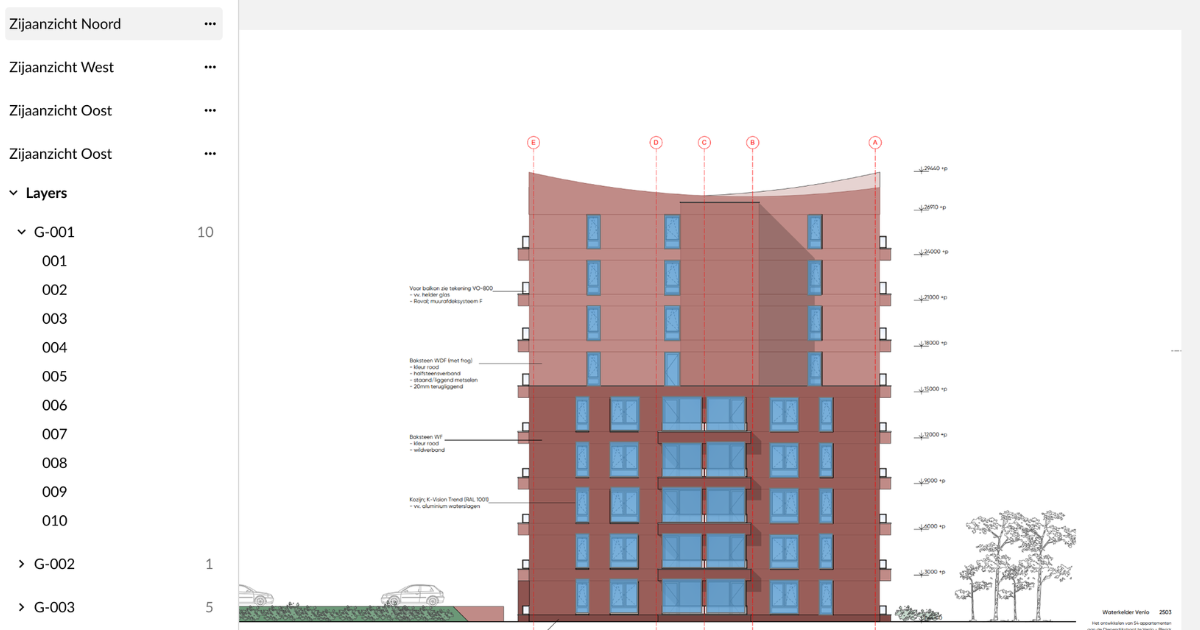
Construction estimation software primarily helps with calculating costs, hours, materials, markups, and margins. AI assists by analyzing project information from various sources simultaneously and providing actionable input for the rest of the estimation process.