How streamlining financial data and processes can increase business success
How streamlining financial data and processes can increase business success Tips and tools for efficient financial management Data leads to opportunities...

Data leads to opportunities and challenges
There is no shortage of data these days. In fact, there is plenty of them. This is incredibly interesting for companies in the financial services industry, among others, because there is a lot of information to get out of it. This way, it can help you make better informed decisions, increase your efficiency and ultimately achieve greater success. However, managing all this data can also present some challenges. That is why, in this blog, we provide you with a number of tips and tools that can help your company to manage your financial efficiently.
Tips for streamlining your financial data management process
Challenge 1: Data silos
When financial data is stored in different systems or departments, we call this data silos. When you, as a company, face data silos, this can lead to inefficiencies and errors in the financial management process. This is because when financial data is stored in different systems or departments, it can be difficult to share data with each other or to combine it into a “single source of truth”. This can lead to a lack of insight into the company's financial performance, which is unfavorable for decision-making.
Tip: An integrated financial management system
One way to reduce these data silos is to use a fully integrated system. By storing financial data in one central location, it is easier for you as a company to access and share this data between different departments and systems.
Tip: Consolidating data sources
Consolidating data sources is a good way to centralize data and reduce it to a “single source of truth”. This aims to provide an integrated overview of all relevant data so that it can then be analyzed and reported in a streamlined and efficient way. In the context of financial data, consolidation can also involve aggregating financial information from different business entities, subsidiaries, or divisions to create consolidated financial statements for a parent company. By also making this process automated, resources and time are saved and unnecessary errors are prevented.
Challenge 2: Data Duplication
Data duplication is another challenge you can face as a company when data is stored in different places such as spreadsheets, databases, and other systems. Because there is no central source of truth, this can lead to confusion and inconsistencies in financial data.
Tip: Use an application that validates data
Duplication of data can be avoided by using an application that validates the data before it is stored. For example, this application looks at whether the same data has already been entered and, in that case, warns employees.
Challenge 3: Data Inaccuracies
Another thing that financial agencies and departments regularly encounter is inaccuracies in data. This can lead to errors in reports and analyses, which can ultimately result in incorrect decisions. For example, inaccuracies can negatively affect a company's strategic choices and financial performance.
Tip: Use analysis software
That is why it is extremely important to avoid these inaccuracies as much as possible. This can be done in various ways. First of all, as described earlier, automating data entry is a good way to ensure that nothing goes wrong in this step. But also, using analysis software is a good way to identify and correct inaccuracies in financial data. This is because this software can compare data and thus identify errors that would otherwise have gone unnoticed.
Tools and Technologies
Fortunately, there are a lot of tools and technologies you can use to streamline your financial data as a company. We have listed a few of them for you:
1. Cloud-based accounting software
The first tool that can help you manage financial data from a central, online location is cloud-based accounting software. This way, it is no longer necessary to merge data from different places, so you can avoid errors caused by inaccuracies. In addition, these types of solutions often also offer useful features such as billing automation and payment processing. Examples of cloud-based accounting software include Microsoft dynamics, SAP, and Visma.
2. Data Visualization Tools
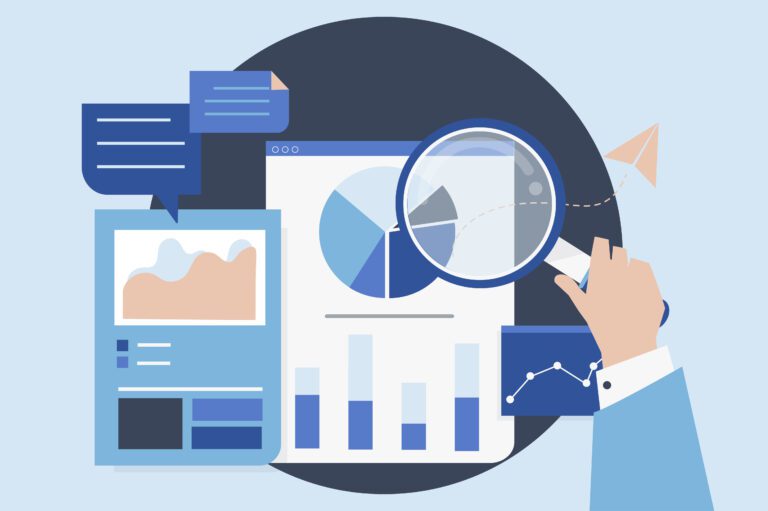
Another useful financial management technology is data visualization tools. These tools help provide insight into large amounts of financial data by converting it into graphs, charts, and other visual displays. This helps you as a company to quickly identify trends, patterns and anomalies, making it easier to make important business decisions. Some popular data visualization tools include Tableau, Microsoft Power BI, and QlikView.
3. Financial Analysis Platforms
If you want to further develop as a company in the field of financial analysis and risk management, there are numerous platforms available that specialize in this area. These solutions offer advanced features such as budgeting, forecasting, scenario planning, and risk analysis. By using these technologies, you as a company can quickly and accurately evaluate trends, future performance and potential risks, enabling you to make strategic decisions based on facts and figures. Examples of popular financial analysis platforms include Planful and IBM Cognos.
Opportunities for your company
In short, streamlining financial data and processes offers your company a lot of opportunities and a stable basis for growing to the next level. With the help of the right tools and strategic considerations, this can be achieved properly.
Do you want to know more about streamlining financial data or are you curious about what this could mean for your company? Schedule an appointment with one of our consultants, they will be happy to think along with you.
Sign up for our newsletter
Every month, we'll send you one email full of smart insights about data-driven work, AI applications and software choices that really help you.
Related articles