No time for innovation
No time for innovation? You often hear it within a company, innovation is our number one priority, yet practice often takes...

You often hear it within a company, innovation is our number one priority, yet practice often works out differently. If you ask most people about their list of priorities, you'll find things like: sending emails, creating reports, doing analyses, updating Excel sheets or keeping track of hours, are often high on the list but innovating is often a bit behind. Recognizable? You're not alone, no time for innovation is a familiar problem. Too bad because innovation is what drives our economy and no company can last long without innovating.
The current working climate is partly to blame for the lack of time for innovation
The current working climate is partly to blame for the lack of time for innovation. Innovative projects are often tedious and cause change within an organization, and therefore risks that not everyone can take. In a period where performance pressure is high and margins are getting smaller, this does not contribute to a culture where there is room for innovation. Innovation is a creative process that takes time and only pays off later. But those who sow will reap, for example, look at the agricultural sector where Wageningen University is constantly innovating and has thus made the Netherlands the largest exporter of nutritional values. Not bad for our little country.
So innovating, easier said than done
So innovating, easier said than done, the first step is to consider what area you're going to innovate in. At the moment, the low-hanging fruit is, of course, digitization and automation. These topics are a hot topic at the moment that can benefit almost any company. A good example of this is Thuisbezorgd, which has automated many of the actions with their App for Users and Platform for Restaurants. Previously, you had to look up the phone number of the snack bar around the corner in the phone book and then call the snack bar owner for your order, now everything is automatically processed digitally via the app. And it works like a train, there's a person with an orange bike on every street corner these days.
Less time spent on small manual tasks leaves more time to spend face-to-face contact with the customer.
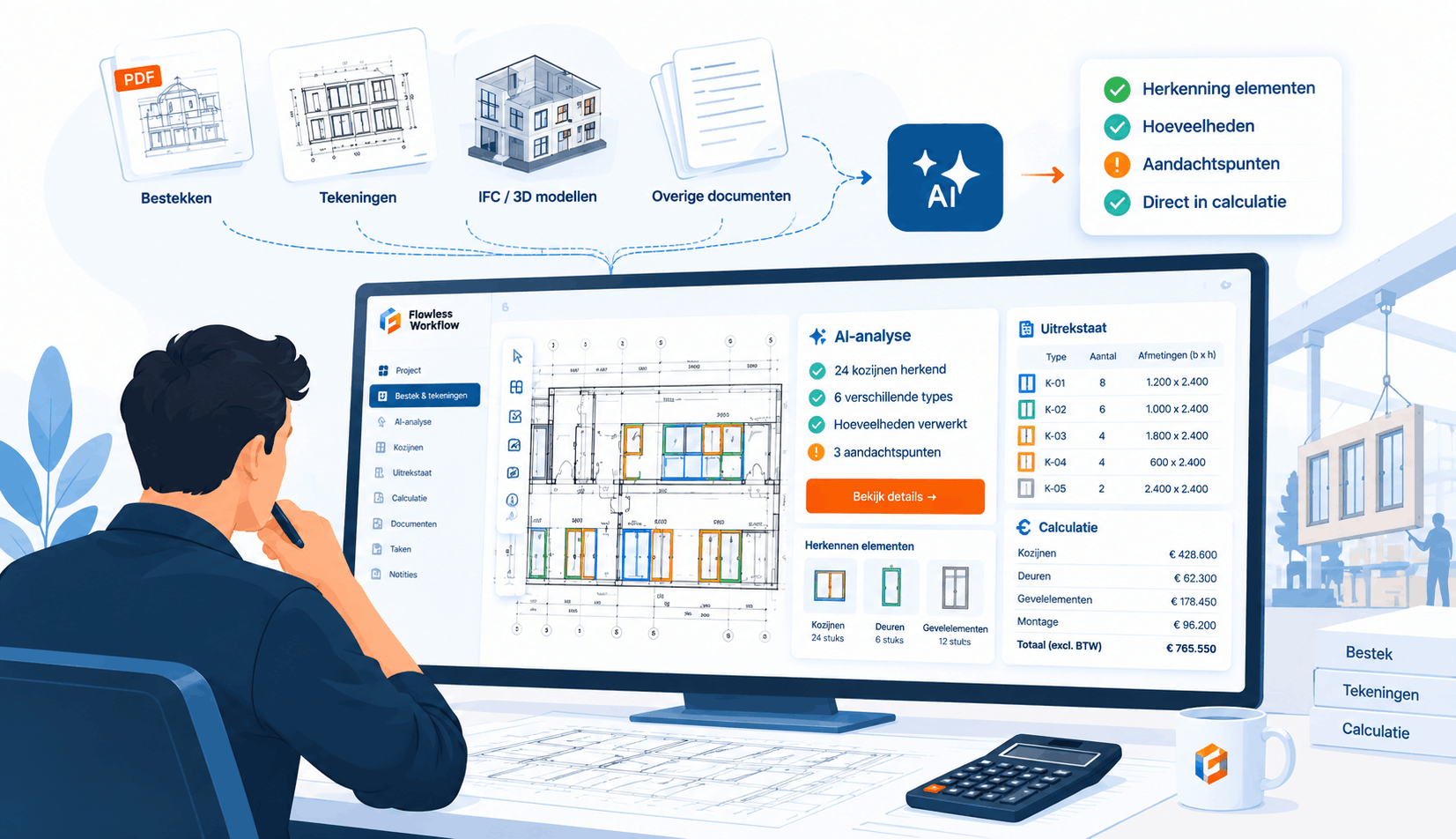
Digitization and automation have two faces in the context of innovation. An accountant, for example, can see digitization and automation as the end goal. By spending less time on small manual tasks that you can let a computer do, there is more time left to spend face-to-face contact with the customer. Furthermore, it can also be seen as a tool. A construction company may want to innovate but is running out of time because they spend too many man-hours preparing drawings, doing analyses and administrative work, for example. This work can often be automated, freeing up time for innovation.
Digitization can be accessible to everyone.
However, digitization is not very accessible to everyone. This is largely why it is getting off to a slow start. Many companies would like to digitize but do not have the right expertise to go through such a process or are not big enough for a major digital makeover. But not all hope is lost, at Flawless Workflow, we would be happy to talk to you to see how you can benefit from digitization. Through a brainstorming session or a small workshop, we can find out how you can best benefit from digitization.
Sign up for our newsletter
Every month, we'll send you one email full of smart insights about data-driven work, AI applications and software choices that really help you.
Related articles