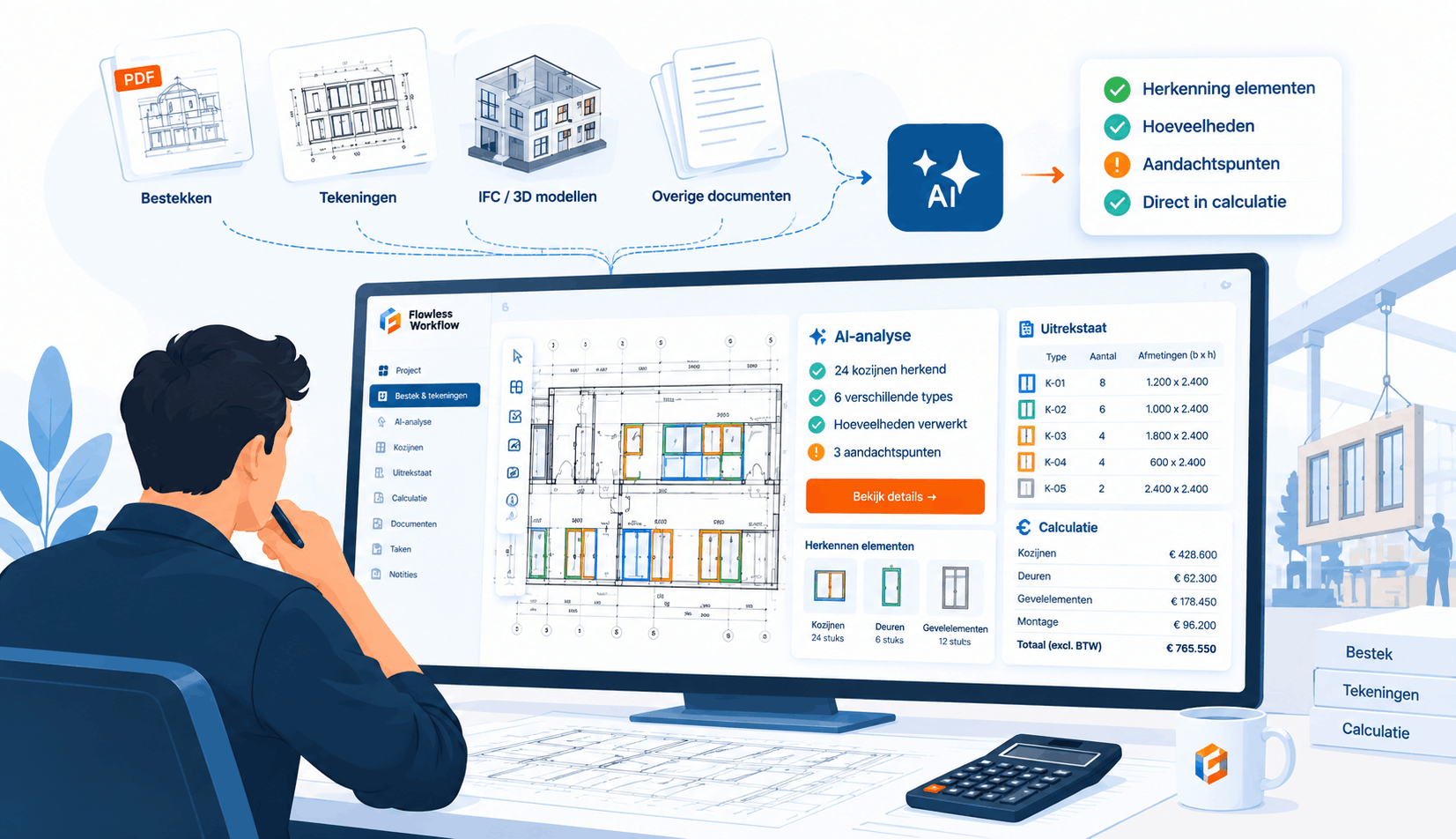
7 AI applications for service companies
Discover 7 innovative ways service companies are using Artificial Intelligence (AI) to optimize their business processes and customer experiences.

AI applications are trending
I'm sure you haven't missed it: Artificial Intelligence (A.I) is currently the topic of discussion when it comes to technological developments. From voice assistants like Siri and Alexa that can answer relatively simple questions to ChatGPT that can analyze, process and recommend complex information, AI development is underway. These developments offer companies great opportunities. After all, AI doesn't just have applications for consumers, there are also a lot of ways in which AI can help service companies facilitate processes and improve customer experiences. In this blog, we therefore put 7 AI applications for the service sector at a glance.
Is your company ready for AI?
Take our test and find out.
What is Artificial Intelligence?
Before we dive into the AI applications, it's good to know first what AI is exactly. Artificial Intelligence is a branch of computer science that aims to create solutions that can perform tasks that usually require human intelligence. This includes human skills such as reasoning, problem solving and learning. Because AI can increasingly mimic these kinds of skills, it is able to take over tasks that are currently mainly done by people, and thus improve a company's operations, customer experience and profits.
Artificial Intelligence Applications
Artificial intelligence can be used in many different ways within companies. A number of important applications are listed below:

1. Chatbots
The first application for which AI can be used are chatbots. This allows companies to improve their customer service and make them more efficient. This is because this allows them to provide faster and more accurate answers to customers. In doing so, AI can help understand the intent of a customer's question. In addition, it can provide personalized responses based on the customer's preferences and previous interactions with the company.
Another advantage of AI-based chatbots is that they can also learn from the interactions in the context of the organization, making them smarter and able to provide better answers. For example, AI uses chatbots to improve customer experience and customer satisfaction, and less time is needed for employees to answer these kinds of questions.
2. Personalizations
AI can also improve the customer experience by using personalization. Based on customer data such as purchase history and behavior, personalized recommendations and offers can be created. AI analyses customer behavior and, based on that, makes recommendations that perfectly match the customer's needs. This has several advantages. First of all, the customer feels understood and higher customer satisfaction will lead to loyalty. In addition, personalized recommendations can also lead to a higher rate of up- and cross-selling, which in turn contributes to higher sales.
3. Predictive analytics
Predictive analyses, which can be carried out with the help of AI, also contribute to mapping customer behavior. For example, it can be investigated which customers are most likely to leave or which customers are most likely to purchase a specific product. In addition, the predictive ability of AI helps with the timing of actions. For example, AI can estimate buying intentions based on history and signals. As a company, you can then respond to this at the right time. Predictive analyses therefore help you, as a company, make informed decisions and take proactive steps to retain customers. Having AI analyze customer data and behavior can therefore help companies in the service sector optimize their marketing, sales and customer retention.
Make AI predictions
Curious about how predictive analytics can transform your business? Contact us now for an informal consultation! Our experts are happy to help you discover the power of AI predictive analytics.

4. Fraud detection
A less obvious but incredibly useful AI application is fraud detection. Through machine learning (a form of AI that can use historical data to learn from it), AI can collect and analyze massive amounts of customer data to detect fraudulent activity. By detecting patterns in customer behavior and transactions, AI can identify anomalies and identify suspicious activity. This can help companies respond quickly to potential fraud and protect their customers against financial damage. In addition, AI can also help predict future fraudulent activity, allowing companies to take proactive measures to prevent fraud. This not only improves customer safety, but can also protect the company's reputation and improve overall customer satisfaction.
5. Process automation
In addition to the fact that AI can often be applied to the customer side, it also has its own business processes a great added value. Indeed, through machine learning, AI can automate repetitive and time-consuming tasks, giving employees more time for more complex tasks that require more skills and creativity. For example, AI can be used to automatically classify and label documents, perform data processing, perform task management, and generate reports and analyses. This not only improves the efficiency of business processes, but also the accuracy and reliability of data and analysis by greatly reducing the risk of human error.
6. Predicting maintenance
When your organization is responsible for maintenance and repairs to machines or buildings, timing is an important factor. It is labour-intensive and expensive to carry out regular checks, but when it happens too late, it can be even more annoying. When is it really necessary, when are you too early and when are you actually too late? AI can help you with that! This is because it can predict the risk of defects in equipment or machines, allowing you to plan maintenance before a failure occurs. This way, thanks to AI, you can reduce the time that machines stop unnecessarily, but you are still able to carry out maintenance on time.
7. Smart planning
In addition to the fact that AI can plan maintenance, it is also able to draw up complex schedules with many factors as smartly as possible for other areas of business. This is because AI can process, analyze and include large amounts of data in this planning. This includes, for example, the availability of staff, the availability of the required resources, the travel time between different locations and the varying demand from customers. That's why AI is super suitable for capacity planning.
AI can also process real-time information to adapt planning to changing conditions and predict any bottlenecks before they occur. For example, the application of artificial intelligence leads to efficient and flexible planning, which in turn ensures productive employees and satisfied customers.
Using AI applications
Despite the fact that the development of AI is still in full swing, there are many applications that you, as a company, can already make good use of. This way, you not only improve productivity, turnover or customer experiences, but you are also future-proof. Because, one thing is certain: Artificial Intelligence is a high-profile and fast-growing technology that we will have to deal with more and more in the future.
Your organization can achieve the best results by setting up AI in the best possible way. Our consultants are there for you and are happy to advise you on how you can make optimal use of this to take your company to greater heights. Are you ready for AI?
From AI strategy to responsible implementation
AI can offer huge benefits, but without a clear AI strategy and the results are lagging behind. Inefficient AI applications and the risk of non-compliance with the AI Act are common pitfalls.
Flawless Workflow supports companies in developing a strategic AI approach and implements solutions that not only comply with regulations, but also contribute to sustainable growth and innovation.
Curious about how to use AI responsibly and effectively? Find out on our Data & AI page!
Sign up for our newsletter
Every month, we'll send you one email full of smart insights about data-driven work, AI applications and software choices that really help you.
Related articles
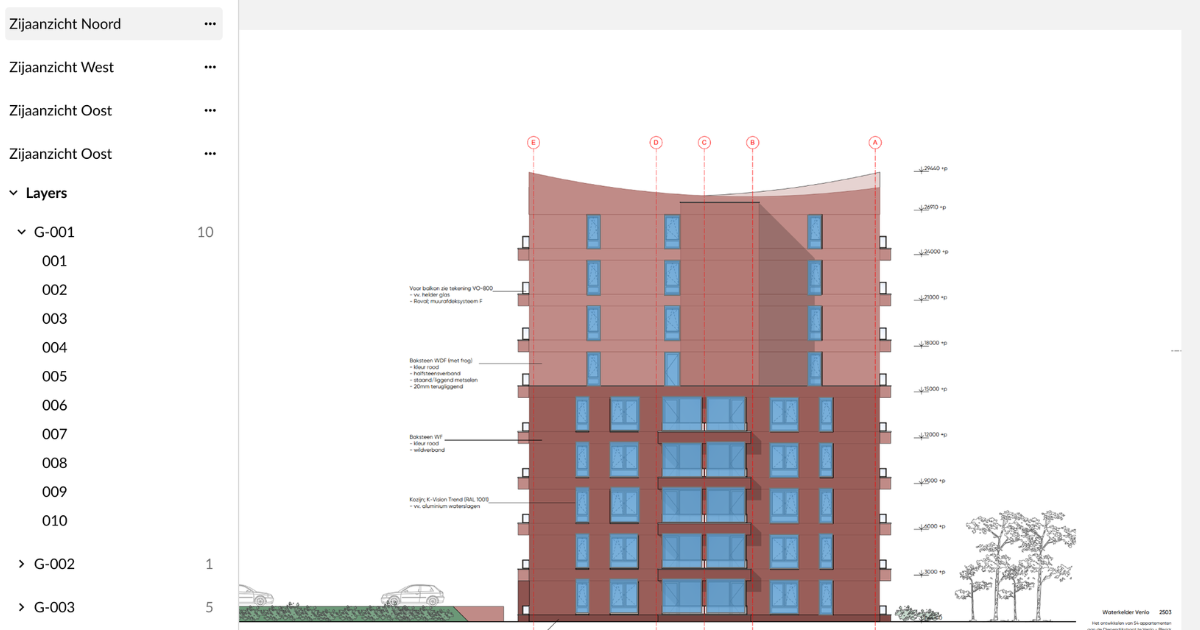
Construction estimation software primarily helps with calculating costs, hours, materials, markups, and margins. AI assists by analyzing project information from various sources simultaneously and providing actionable input for the rest of the estimation process.